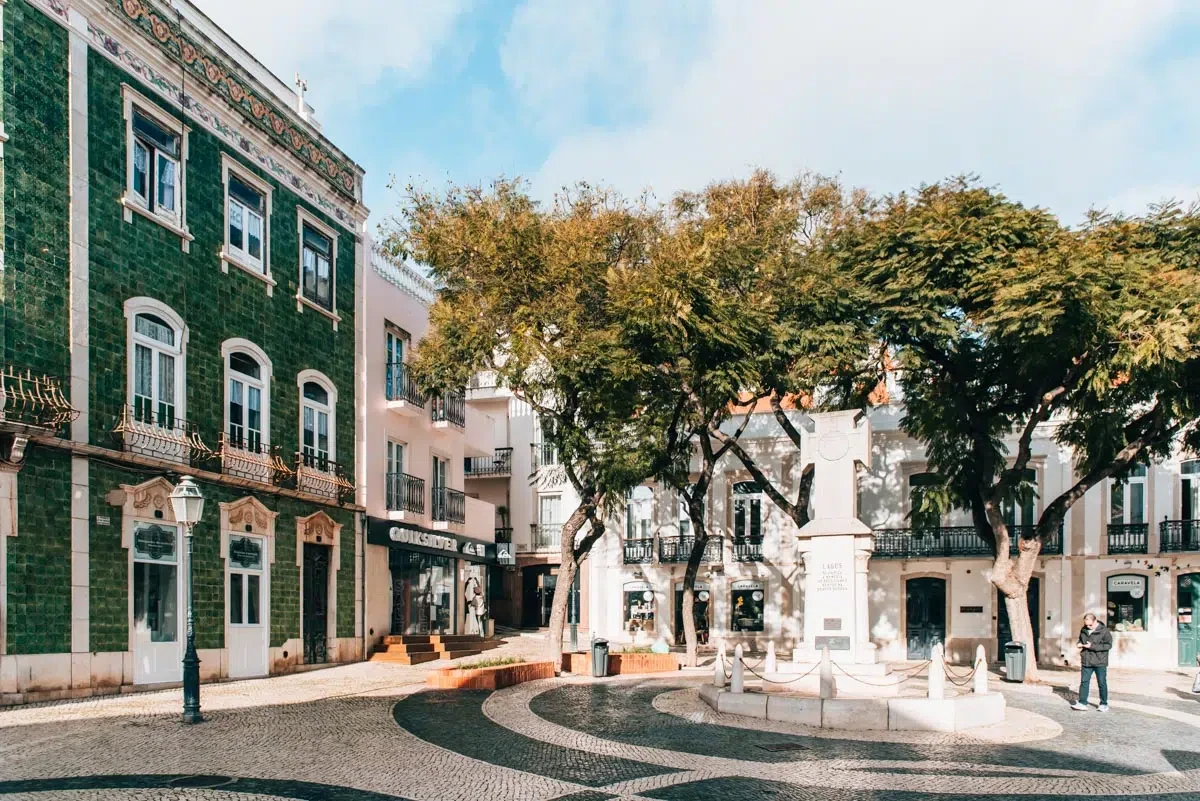
Lagos, Algarve: A Town That Still Feels Lived-In
A Town That Wears Its Life Well
Plenty of coastal towns in southern Europe have been reshaped entirely around tourism — all hotels and t-shirt shops, shuttered and hollow outside of July and August. Lagos, on Portugal's southern coast, has resisted that fate more than most. It's not the biggest town in the Algarve, and it doesn't try to be the flashiest. What it has instead is something harder to manufacture: the unmistakable feel of a place people actually live in, tourists or no tourists.
Life Goes On a Few Streets Back
Walk a few streets back from the marina and the postcard version of Lagos quietly gives way to the real one. Laundry hangs between balconies. Elderly neighbors sit out on stoops in the late afternoon, trading news the way they probably have for decades. Small grocers and padarias know their regulars by name and have the same stock of dusty tins and fresh bread every morning, tourist season or not.
This is the part of Lagos that doesn't make it into most travel photos, and that's exactly what makes it worth seeking out. Wander far enough from the main squares and you'll find hardware shops, a barber with three chairs and one radio station, kids kicking a ball against a wall that's clearly absorbed a thousand other games before this one. It's unremarkable in the best sense — proof that Lagos isn't performing for anyone.
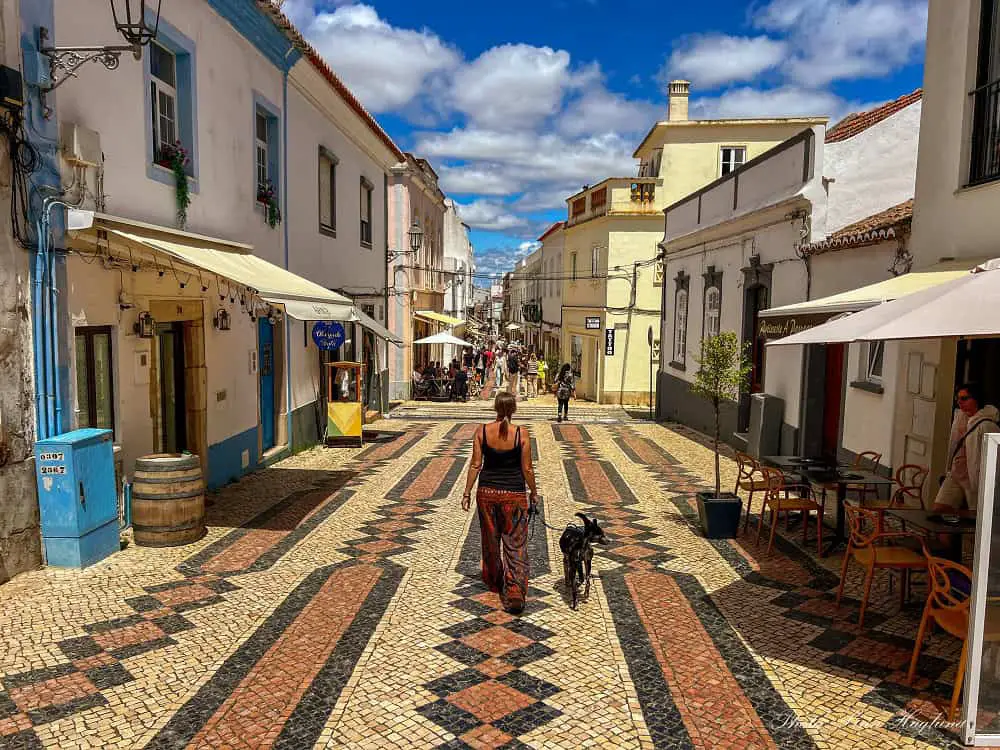
An Old Town Built for Wandering, Not Just Sightseeing
The historic center, still partly enclosed by 16th-century walls, is compact enough to wander without a map, but its real charm isn't in any single landmark — it's in the accumulation of small, ordinary details. A tiled doorway here, worn smooth by generations of hands. A tiny neighborhood chapel tucked into a side street, unremarked upon in guidebooks. A café where the same waiter has poured bica for regulars every morning for years, and where you become a temporary regular yourself after just two visits.
Locals do their actual shopping at the municipal market near the marina, alongside the visitors picking up fruit for the beach. Fishing boats still go out most mornings and unload at the docks the way they always have, marina developments notwithstanding. None of this is staged for visitors — it's simply the town's ordinary machinery, still running, which is precisely what gives Lagos its texture. It feels less like a stage set and more like a place that simply happens to be beautiful, and doesn't mind if you notice.
Where the Postcard and the Everyday Meet
The light helps, of course — the late-afternoon sun that turns whitewashed façades and terracotta rooftops faintly golden, softening the cobblestones underfoot. But what makes that light feel different in Lagos than in a more manicured resort town is what it's falling on: real windows with real curtains, balconies with someone's actual plants, doorsteps that get swept every morning out of habit rather than for show.
Even the famous cliffs and coves feel like they belong to the town rather than to an industry built around it. Fishermen still cast lines from the rocks near Ponta da Piedade at dawn, before the first tour boats arrive. Kayak guides are often locals who grew up swimming in these same coves. The tourism here has grown up alongside the town, rather than replacing it — which is rarer, on this coast, than it should be.
The Coastline Does the Rest
Charm isn't only architectural — in Lagos, the coastline itself has a kind of gentle theatrics. Small coves like Praia Dona Ana and Praia do Camilo are tucked beneath the cliffs, reached by wooden staircases that make arriving feel like discovering them yourself, even though thousands of people did the exact same thing yesterday. There's something charming in that shared secret — everyone in on it, nobody minding.
A slow boat trip through the grottoes near Ponta da Piedade adds to the spell. The rock arches, sea caves, and hidden inlets aren't dramatic in a loud way — they're quietly astonishing, the kind of scenery that makes conversations on the boat trail off mid-sentence.
Small Rituals, Slowly Adopted
Part of what makes Lagos charming is how easily its rhythms become your own, even for a short stay. A morning pastel de nata and coffee at a café table. An afternoon walk along the marina, past fishing boats that still go out most mornings. Grilled sardines and a glass of vinho verde as the evening cools. A wander through the old town after dinner, when the streets empty out and the whitewashed walls glow faintly under streetlight.
None of it is extraordinary on its own. Together, it adds up to something that feels like a small, good life — one you get to borrow for a few days.
Why It Sticks With You
Lagos doesn't rely on spectacle the way some destinations do. Its charm is cumulative — the laundry on the balconies, the same waiter pouring bica each morning, the fishermen who were out on the water before the tour boats even launched. It's a town where the tourist experience and the actual, ordinary life of the place still overlap, rather than one having quietly replaced the other.
That's probably the truest measure of a lived-in town: not that it puts on a show for you, but that it simply carries on being itself while you're there, and lets you feel, for a few days, like you're part of its rhythm rather than a spectator to it.
If you would like to write an article for our Lifestyle page about Portugal or boating life we would love to hear from you.
Please send your article for review to [email protected]